It is the elephant in every medical room right now: weight-loss injectables.
Drugs like Ozempic and Wegovy have completely taken over the conversation around metabolic health. Every week, I have patients sitting in my office asking if these weekly injections are the only way to finally lose stubborn weight, clear their brain fog, and balance their blood sugar.
While these pharmaceutical GLP-1 agonists absolutely have a time and a place and I prescribe them often, relying on a lifetime prescription is not a Longevity Medicine strategy.
What if I told you that your body has a built-in mechanism to produce its own GLP-1? It is entirely natural, it protects your cellular health, and it lives in your gut. Meet Akkermansia muciniphila, the keystone bacteria being dubbed the “Skinny Bug.”
The Mechanism: How Your Gut Makes GLP-1
The reason drugs like Ozempic work is that they mimic a naturally occurring hormone in your body called GLP-1 (Glucagon-like peptide-1). GLP-1 tells your pancreas to release insulin, slows down your digestion so you feel full longer, and turns off the “food noise” in your brain.
But ideally, you shouldn’t need a medication to trigger this process. A healthy microbiome does it for you.
Akkermansia muciniphila is a highly specialized strain of bacteria that makes up a significant portion of a healthy gut microbiome. It has a very specific job: it lives in the protective mucus lining of your intestines, constantly munching on the mucin and communicating with your immune system.
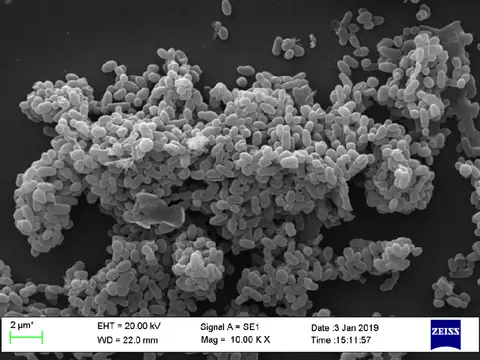
Zhang, Ting & Li, Qianqian & Cheng, Lei & Buch, Heena & Zhang, Faming. (2019). Akkermansia muciniphila is a promising probiotic. Microbial Biotechnology. 12. 10.1111/1751-7915.13410.>
When Akkermansia is thriving, it works metabolic magic:
The Natural GLP-1 Boost:
The Gut Barrier Guardian
It actually strengthens the tight junctions of your gut lining, preventing “Leaky Gut” and stopping systemic inflammation in its tracks.
The problem? Modern diets, chronic stress, and overuse of antibiotics have decimated Akkermansia populations. When this bug goes extinct in your gut, your natural GLP-1 production plummets, insulin resistance can climb, and weight gain can becomes incredibly stubborn.
The Fix: How to Rebuild Your Natural GLP-1
Before we try to boost a specific bacteria, we need to know if you even have any left. Using the GI Advanced Stool Test (GI-MAP we can precisely quantify your baseline Akkermansia levels. If they are undetectable, we know exactly why your metabolism is stalled.
1. Test, Don't Guess (The GI-MAP)
Every time your blood sugar crashes, your adrenals pump out cortisol as an emergency mechanism to bring it back up. If you are drinking coffee on an empty stomach and skipping breakfast, you are chemically inducing a cortisol spike. Start your day with 30 grams of protein to keep your adrenals quiet.
2. Feed It Polyphenols
Akkermansia doesn’t eat standard fiber; it loves polyphenols. These are the dark, rich antioxidants found in deep-colored plants. To dramatically increase your Akkermansia abundance, you need to consume high amounts of cranberry extract, pomegranate, green tea, and dark berries [2].
3. Practice Strategic Fasting
Remember the Jet Lag protocol we discussed earlier this month? Strategic fasting isn’t just for your circadian rhythm; it is food for Akkermansia. When you stop eating for 12 to 16 hours, your body naturally thickens its intestinal mucus lining. Since Akkermansia feeds on this mucus, giving your digestion a break provides the exact real estate this bacteria needs to multiply.
Metabolic Health Starts Within
Weight-loss injectables might offer a quick fix, but true, sustainable metabolic health requires healing the root cause. By focusing on your microbiome and feeding your keystone bacteria, you can naturally optimize your insulin, boost your own GLP-1, and build a resilient metabolism for the long haul.
Curious About Your "Skinny Bug" Levels?
Stop guessing with your gut health. Dr. Jennifer Luis utilizes the GI-MAP Stool Test to measure your exact Akkermansia levels and build a customized, naturopathic metabolic protocol.
References:
- Plovier, H., et al. (2017). A purified membrane protein from Akkermansia muciniphila or the pasteurized bacterium improves metabolism in obese and diabetic mice. Nature Medicine, 23(1), 107-113.
- Roopchand, D. E., et al. (2015). Dietary Polyphenols Promote Growth of the Gut Bacterium Akkermansia muciniphila and Attenuate High-Fat Diet-Induced Metabolic Syndrome. Diabetes, 64(8), 2847-2858.
- [Image Source] Zhang, Ting & Li, Qianqian & Cheng, Lei & Buch, Heena & Zhang, Faming. (2019). Akkermansia muciniphila is a promising probiotic. Microbial Biotechnology. 12. 10.1111/1751-7915.13410.